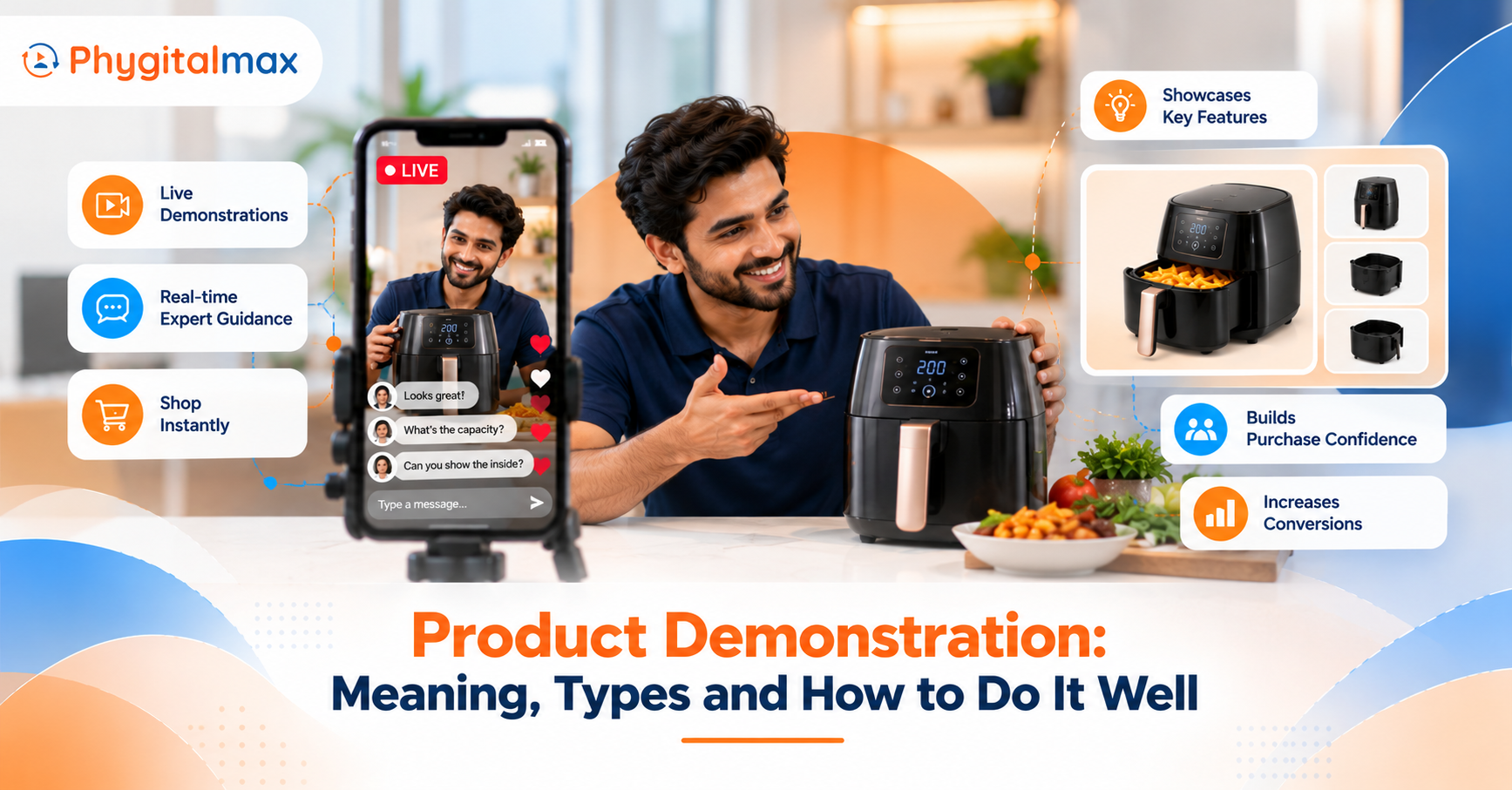
A spec sheet tells you what a product claims. A product demonstration shows you what it does.
You are standing in a store, looking at a washing machine. The label says “10 kg, 5 star, 14 programs.” None of that tells you whether the door opens wide enough for a bedsheet, how loud the spin cycle is, or whether the controls make sense.
Then a salesperson presses start and shows you. Ten minutes later, you know more than the brochure could ever say.
That is a product demonstration. This guide covers what it means, the main types, real examples for physical products, how to run one step by step, and how video has changed the way people see products before they buy.
What Is a Product Demonstration?
A product demonstration is a presentation where a product is shown working, in real time, to a potential buyer. The goal is to let the buyer see the product in use, ask questions and judge fit before spending money.
In marketing, Wikipedia describes a product demonstration as a promotion where a product is demonstrated to potential customers, with the aim of getting them to purchase it. MBA Skool adds that a demo displays the product’s performance in real time and helps the customer evaluate it.
A product demo is the short form of the same thing. People use “product demo” for online or video formats and “product demonstration” for the wider idea, but the meaning is the same.

Why Product Demonstrations Work
A demonstration answers the questions a buyer cannot answer from a page.
- It replaces claims with proof: MBA Skool notes that a demo gives ready proof, because showing what a product does supports what the salesperson says.
- It handles doubts on the spot: a buyer with a specific concern can ask and see the answer straight away.
- It builds a sense of ownership: watching a product work makes it easier to picture using it.
- It speeds up decisions: when the problem is solved during the demonstration, the sale is usually close.
Video has made this even more important. Wyzowl’s 2026 State of Video Marketing survey (266 respondents, mostly global) found that 85% of consumers said a video had convinced them to buy a product or service, and 63% said a short video is how they would most like to learn about a product. It is a vendor survey with a small sample, so treat it as direction.
Read more: Why Live Expert Demonstrations Lift Product Page Conversions
Types of Product Demonstration
In-store demonstration
The classic format. A demonstrator shows the product to shoppers in a store, so they can touch, test and ask. It is common for appliances, kitchen equipment and personal care items.
In-home demonstration
A representative visits the customer’s home and shows the product in the space where it will be used. It works well for large or fitted products, but it takes time and travel.
Trade shows and events
Demos at kiosks and fairs reach many people quickly. The conversations are short and the crowd is mixed.
Recorded video demonstration
A pre-made video shows the product working. It scales well and can be watched anytime, but the buyer cannot ask a question or request a closer look.
Live video demonstration
A real salesperson shows the product on camera, in real time, and answers the buyer’s questions as they come up. It keeps the personal side of an in-store demo while removing the travel for both sides. It is the format growing fastest in online shopping.
Read more: 1:1 Live Video Shopping | Live Shopping vs Traditional Ecommerce
Product Demonstration Examples for Physical Products
The best demonstrations show the one thing the buyer cannot judge from a photo. Here is what that looks like across home products.
- Washing machine: show the door opening, the drum size, the control panel and how loud a cycle sounds. This step-by-step guide to using an automatic washing machine shows the kind of detail a buyer wants to understand before choosing.
- Dishwasher: load real utensils into the racks to show what fits. If the buyer is unsure whether a dishwasher suits an Indian kitchen, this myths-versus-facts guide covers the common questions.
- Mixer grinder: grind something dry and something wet, and show the jars and blades. Wattage claims make more sense when explained, as in this guide to mixer grinder wattage.
- Ceiling fan: show the remote, the speed settings and how it hangs, especially for high or false ceilings. This guide to ceiling fans for high and false ceilings shows why installation context matters.
- Smart lock: enroll a fingerprint and unlock the door on camera. A lock is hard to judge from specs alone, and GizmoSmart’s smart lock guides pair well with seeing one work.
- Water purifier: show the tank, the filters and how to refill. This guide to RO purifier storage capacity helps a family match capacity to daily use.
MBA Skool itself uses electrical appliances as a standard example: the product is run so the customer can see its function before deciding.
How to Demonstrate a Product: Step by Step
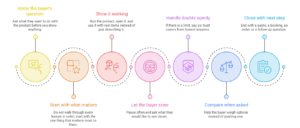
- Know the buyer’s real question: ask what they want to do with the product before you show anything.
- Start with the one thing that matters most to them: do not walk through every feature in order.
- Show it working, not described: run the product, open it, use it with real items.
- Let the buyer steer: pause often and ask what they would like to see closer.
- Handle doubts openly: if there is a limit, say so. Trust comes from honest answers.
- Compare when asked: help the buyer weigh options instead of pushing one.
- Close with a clear next step: a quote, a booking, an order, or a follow-up question.
Common Product Demonstration Mistakes
- Feature dumping: showing everything instead of what the buyer cares about.
- Talking more than showing: a demonstration should be mostly action.
- No chance to ask: a one-way presentation feels like an advertisement.
- Ignoring the setting: a product that fits a showroom may not fit a real home.
- Ending with no next step: the buyer leaves interested but undecided.
MBA Skool also notes the real costs of in-person demos: the expense of sales staff and demo units, and time spent on prospects who never buy. Those costs are a large part of why brands are moving demonstrations to video.
From Guide to Live Demo: See the Product Before You Pay
Most buyers now follow the same path. They read a guide, compare options, and then want to see the product with their own eyes before paying.
That is how GizmoSmart works. It publishes buying guides, comparisons and reviews for appliances and other products across India, such as microwave vs oven, so buyers understand what matters before they choose. Many pages then offer a way to see the product live: book a free video session, watch the product work and ask an expert.
Watch the product live: Browse live-demo products on GizmoSmart or start from the GizmoSmart homepage to find a guide for the product you are considering.
The live video sessions run on PhygitalMax, the video commerce platform that connects shoppers to an experienced salesperson on the page. It is the digital version of the in-store demonstration, with the questions and answers left in.
Read more: Phygital Commerce Explained
A Buyer’s Checklist for Any Product Demonstration
Use this list in a store, at home or on a live video demo.
- See the product run, not just stand.
- Ask about the one thing you are unsure about.
- Check size, noise, controls and ease of cleaning.
- Ask what is not included or not covered.
- Ask how setup, installation and service work after purchase.
- Compare with at least one other option.
- Ask what you should check when the product arrives.
What This Means for the Business
- Fewer unanswered doubts: a demonstration answers the question that would otherwise end the visit.
- Better qualified buyers: the people who book a demo are already interested.
- Lower demo cost: live video avoids travel and demo units in every location.
- Stronger trust: EY’s 2024 Future Consumer Index found that 78% of Indian consumers prefer to shop on platforms that offer human customer service support. A live demo is the most visible form of that support.
Read more: The Trust Gap: Why Buyers Hesitate at the Final Click | Live Video Customer Support
Conclusion
A product demonstration is simple in idea and powerful in effect: show the product working, answer the real question, and let the buyer decide with confidence. The format has moved from the shop floor to the screen, but the point has not changed.
For buyers, the best habit is to research first and then see the product live before paying. For brands, the best habit is to put an experienced person where the decision is made.
Ready to offer live product demonstrations on your own pages? Book a live demo or talk to our team. Buyers can also watch products live on GizmoSmart.
FAQ
Q: What is a product demonstration?
A: A product demonstration is a presentation where a product is shown working in real time to a potential buyer. The aim is to let the buyer see it in use, ask questions and judge fit before buying.
Q: What are the types of product demonstration?
A: The main types are in-store demonstrations, in-home demonstrations, trade show and event demos, recorded video demos and live video demonstrations. Live video combines the personal feel of an in-store demo with the reach of online.
Q: What is an example of a product demonstration?
A: A salesperson running a washing machine to show drum size, door opening and noise is a common example. Test drives for cars and cooking demonstrations with kitchen equipment are others.
Q: What are the benefits of a product demonstration?
A: A demonstration provides proof of what the product does, answers specific doubts, helps the buyer picture ownership and can speed up the decision. It also helps the seller understand the buyer better.
Q: How do you demonstrate a product effectively?
A: Learn the buyer’s main question first, show the product working rather than describing it, let the buyer steer, answer doubts openly and end with a clear next step.
Q: What is the difference between a product demo and a product demonstration?
A: They mean the same thing. “Demo” is the shorter form and is used more often for video and online formats.
Q: What is the meaning of product demonstration in Hindi?
A: In Hindi, product demonstration means उत्पाद प्रदर्शन, which is showing a product in action to a potential buyer.
Q: Can a product demonstration be done online?
A: Yes. A recorded video can show the product, and a live video demonstration lets a salesperson show the product and answer questions in real time.