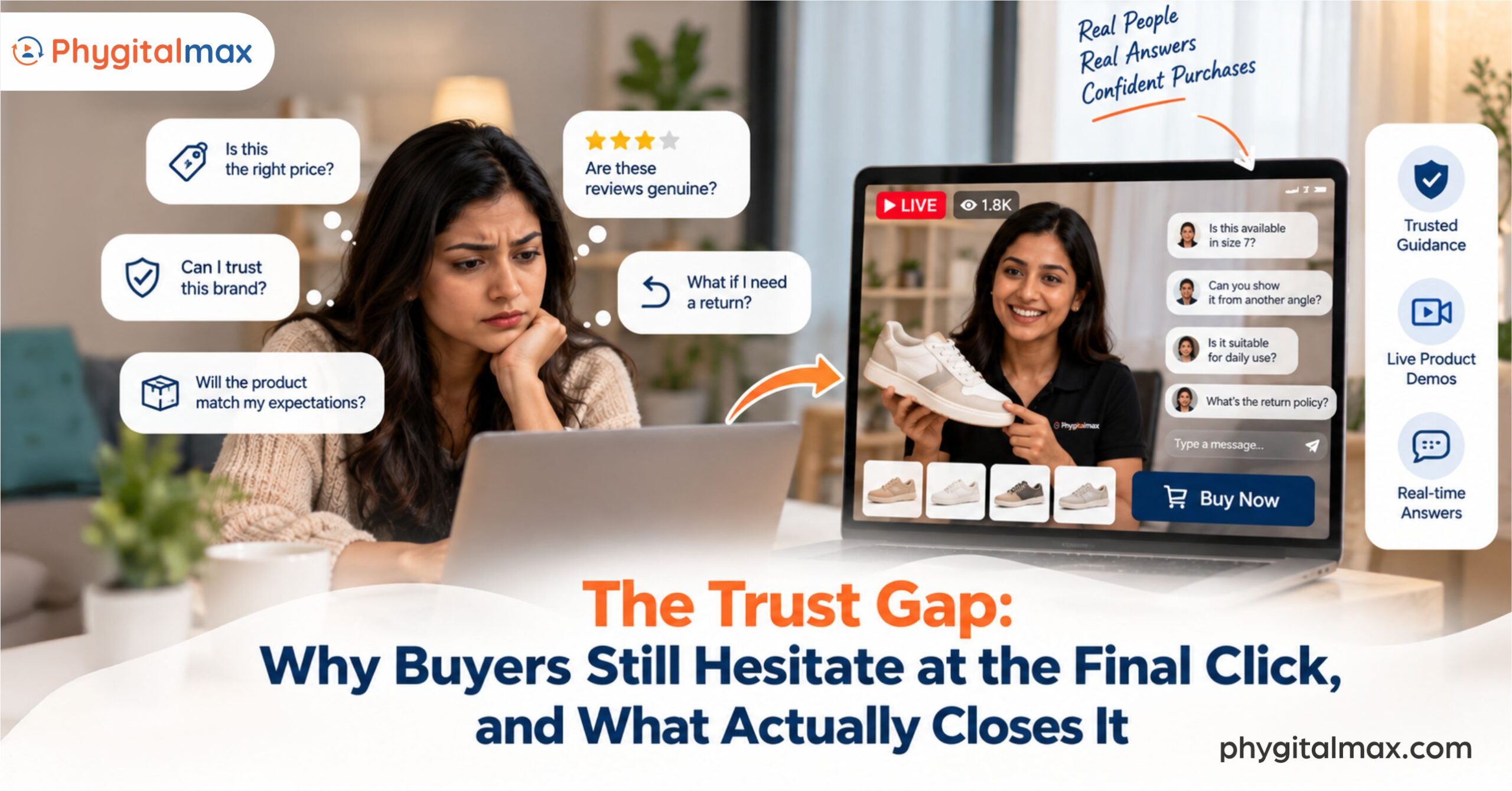
A product can survive a mediocre photo. It rarely survives a question that never gets answered.
The average online shopping cart gets abandoned 70 percent of the time, according to Baymard Institute’s aggregation of 50 separate industry studies. Strip out the shoppers who were just browsing, and the honest reasons left behind are almost all versions of the same problem, uncertainty. Extra costs the shopper did not expect. A return policy they were not sure about. And, in nearly one out of five cases, according to Baymard’s own research, a simple lack of trust in the site itself at the exact moment they were about to pay.
That gap between add to cart and place order is not a design problem you fix with a better button. It is a confidence problem, and confidence is something static pages have never been very good at building.
Why the Final Click Is Where Confidence Breaks Down
Every step before checkout is forgiving. A shopper can browse ten tabs, compare prices, read a few reviews, and take their time. The final click is different. It is the one moment where hesitation has a real cost, and where every unanswered doubt shows up at once, will this actually fit, is the return process going to be a hassle, is this site trustworthy enough to hand over payment details to.
Baymard’s research breaks this down clearly. Once just browsing shoppers are removed from the picture, the remaining reasons people abandon a purchase are led by unexpected costs, at 40 percent, followed by slow delivery, at 20 percent, and, notably, not trusting the site with payment information, at 19 percent. Every one of these is a trust problem wearing a different costume. A shopper who trusted the brand completely would not abandon over a shipping fee they could have been told about upfront.
Read more: Cart Abandonment in Ecommerce: Why It Happens and How Phygital Live Video Fixes It
Why More Content Does Not Close the Gap
The instinctive fix for hesitation is more information, longer product descriptions, more photos, an FAQ section, a comparison chart. All of it helps, and none of it closes the gap completely, because none of it can respond to the one specific doubt a shopper actually has in that moment. A page with fifteen FAQs still cannot answer the sixteenth question, the one unique to that shopper’s situation.
This is the real limit of self-service digital customer experience. It scales beautifully for information a business can predict in advance. It does nothing for the doubt a business cannot predict, which is exactly the doubt sitting between a shopper and the final click. Closing that requires a channel that can respond in real time, not a channel that can only be pre-written.
Read more: 5 Live Commerce Strategies That Instantly Improve Your Ecommerce Conversion Rate
Closing the Trust Gap with Live Video
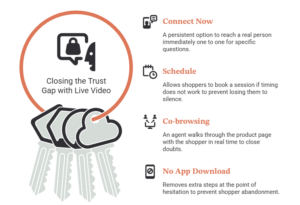
This is the exact layer PhygitalMax adds to a product page. Instead of leaving a hesitating shopper alone with a static page, a persistent Connect Now option lets them reach a real person immediately, one to one, to ask the specific question that a spec sheet was never going to answer. If timing does not work, Schedule lets them book a session instead, so the brand never simply loses a shopper to silence.
Co-browsing lets that same agent walk through the exact product page with the shopper in real time, rather than describing it over a phone call, which closes doubts about fit, sizing, or process far faster than a written return policy ever could. None of this requires an app download on the shopper’s side, which matters, because every extra step at the point of hesitation is one more reason to abandon rather than push through. The result is a product page that can respond to trust, not just present information and hope it is enough.
What This Means for the Business
- Abandonment tied to trust becomes solvable, since an agent answers the actual question in real time instead of guessing at which FAQ might address a shopper’s doubt, closing the specific gap that was about to cost the sale
- Return rates drop alongside abandonment, because a shopper who gets their fit, sizing, or compatibility question answered before buying is far less likely to need a return afterward, protecting margin on both ends of the transaction
- Conversion data becomes diagnostic, not just descriptive, since live conversations surface the specific doubts shoppers actually have, information a checkout funnel report can never provide on its own
- Trust becomes a design decision, not an accident, letting a brand build reassurance into the page itself on purpose instead of hoping enough trust badges and reviews add up to confidence
- Guided selling replaces guesswork, since a real person guiding a hesitant shopper through their specific concern converts more reliably than a static page optimized for an average visitor who does not actually exist
Conclusion
The final click has always been where online shopping quietly loses its most promising customers, not because they changed their mind, but because a doubt went unanswered at the one moment it mattered most. Baymard’s data confirms what most ecommerce teams already suspect, that trust, not interest, is what breaks down at checkout. Closing that gap does not require more content on the page. It requires the ability to answer the one question a static page was never built to handle.
Ready to close the trust gap on your product pages? Talk to PhygitalMax and see how it works.
Frequently Asked Questions
Q: Why do online shoppers abandon their cart even after adding items to it?
A: According to Baymard Institute’s research, once shoppers who were just browsing are excluded, the leading reasons are unexpected extra costs, slow delivery, and not trusting the site with payment information, all forms of unresolved doubt at the final step.
Q: Can more product information on a page fix cart abandonment caused by trust?
A: Only partially. Written content can answer predictable questions in advance, but it cannot respond to the specific, unpredictable doubt an individual shopper has in the moment, which is usually what causes real hesitation.
Q: What is the difference between guided selling and self-service ecommerce?
A: Self-service relies on a shopper finding their own answers through photos, specs, and FAQs. Guided selling puts a real person into that same moment to answer the shopper’s specific question directly, closing doubts self-service cannot anticipate.
Q: How does live video help reduce checkout hesitation specifically?
A: It lets a shopper ask their exact question and get an immediate, specific answer, rather than searching through generic content hoping it happens to cover their situation, which directly addresses the trust-related reasons for abandonment.
Q: Does closing the trust gap at checkout also reduce returns?
A: Often, yes. A shopper who has their fit, sizing, or suitability question answered before purchasing is less likely to receive a product that surprises them, which is one of the most common drivers of returns.