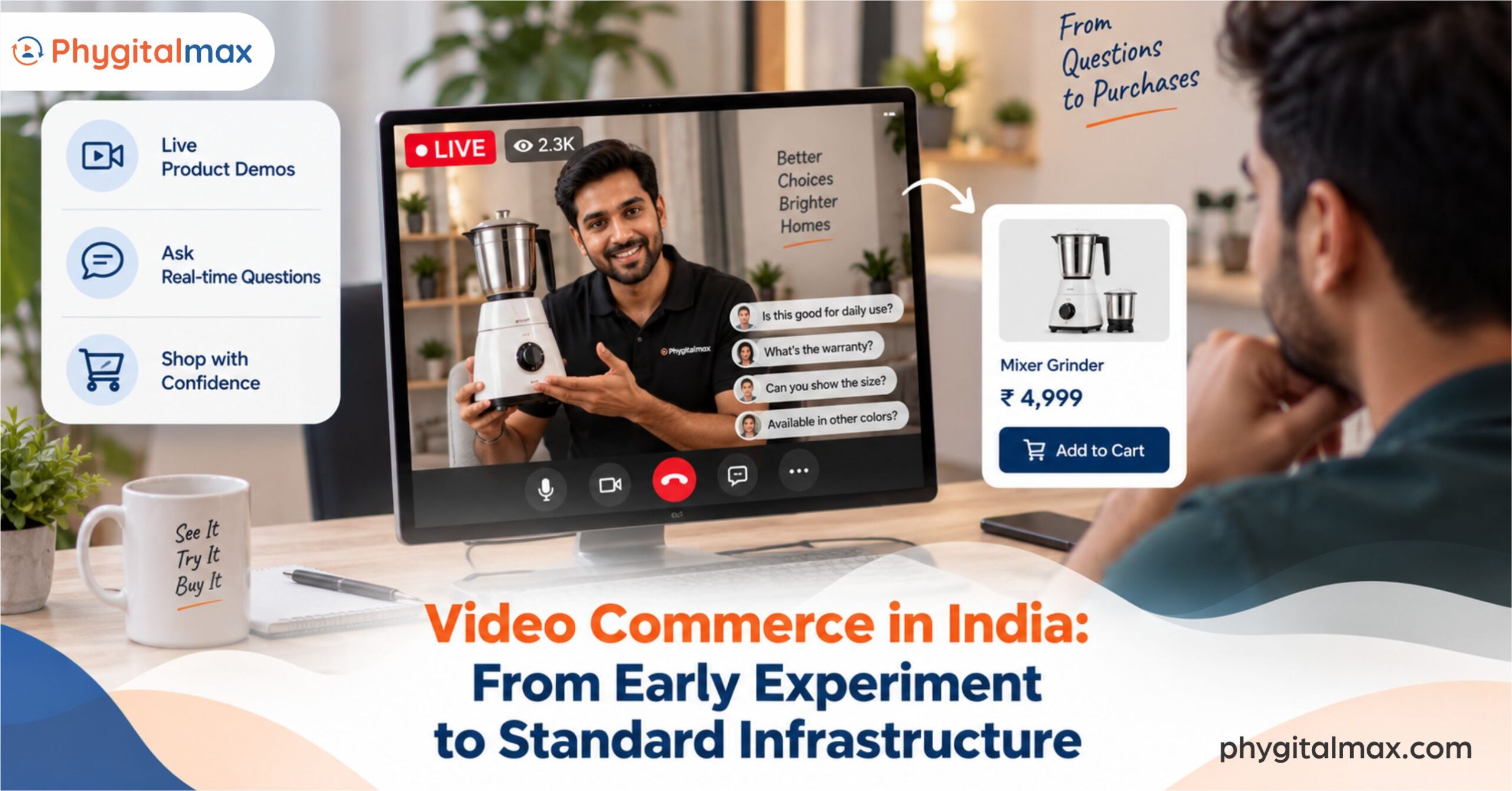
Five years ago, video commerce in India was a campaign brands ran for a weekend. Today, it is quietly becoming the infrastructure their product pages run on.
Rewind to the early 2020s and video commerce in India looked a lot like a marketing experiment. A brand would run a short burst of live sessions timed to a sale, lean on a big personality to pull in eyeballs, and measure success in views rather than revenue. It worked well enough to get attention, but it lived in the marketing budget, not the sales stack.
That phase mattered. It proved Indian shoppers would actually show up for video and buy through it. What it did not prove was whether video commerce could run every day, on every product page, without a campaign pushing traffic to it. That is the gap between an experiment and infrastructure, and India’s video commerce market has spent the last few years closing it.
Why India’s First Wave of Video Commerce Looked Like a Campaign
An industry report from RedSeer, a market research firm, projected back in 2021 that India’s live commerce GMV would reach 4 to 5 billion dollars by 2025, led heavily by fashion and beauty categories. At the time, the report also described how the format was actually being used, brands running one to two day bursts of activity, backed by short-form video and celebrity-style endorsements, rather than a channel that operated continuously.
That campaign approach made sense for a first wave. It let brands test video commerce without rebuilding how their sales teams worked. But a channel that only runs during a promoted burst cannot answer a shopper’s question on a random Wednesday afternoon, three months after the campaign ended. It also could not be measured with much confidence, since the numbers it produced reflected a spike in attention, not everyday buyer behavior.
From Pilot Budgets to Core Infrastructure
What has changed since then is not that video commerce got more popular in India, it was already popular. What changed is where it sits inside the business. The brands seeing the strongest results now treat video commerce as infrastructure tied directly to the product page, always available, rather than a periodic event tied to a sale calendar.
This mirrors a pattern seen globally. McKinsey’s analysis of live commerce found companies running it as a standing channel report conversion rates approaching 30 percent, up to ten times higher than conventional ecommerce, and projects live commerce could account for 10 to 20 percent of all ecommerce by 2026, this year. India is following the same curve, just a few years behind the earliest movers, which puts it right at the point where infrastructure decisions matter more than campaign creativity.
Read more: Live Shopping vs Traditional Ecommerce: Which One Wins in 2026?
The Live Video Commerce Digital Approach
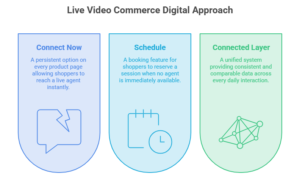
PhygitalMax was built for exactly this shift, from video commerce as a promoted event to video commerce as standing infrastructure. Every product page carries a persistent Connect Now option, so a shopper in any city, on any day, can reach a live agent the moment they have a question, with no campaign or scheduled show required.
If no agent is free that second, Schedule lets the shopper book a session at a time that works for them, so the brand never loses a motivated buyer to a closed calendar. Because every session runs through the same connected layer, brands get consistent, comparable data across every interaction, every day, which is the only way to actually measure video commerce as infrastructure rather than a campaign result.
Read more: Phygital Commerce Explained: How Brands Replicate In-Store Trust Through Live Video
What This Means for the Business
- Video commerce stops being a marketing line item, and moves into the sales stack, budgeted and measured continuously, not queued behind the next campaign or festive sale
- Performance data becomes trustworthy, since numbers from an always-on setup reflect real, everyday buyer behavior instead of the artificial spike of a promoted event
- Infrastructure spend pays back faster, because a studio or agent pool built for occasional campaigns sits idle most of the year, while the same setup running daily earns back its cost far sooner
- Category coverage expands beyond fashion and beauty, since once video commerce is infrastructure rather than a campaign format, considered purchases like furniture and appliances can use it just as easily
- The brand builds a durable asset instead of a highlight reel, and a running channel with daily conversion data compounds in value the longer it operates
Conclusion
India’s video commerce story did not start with infrastructure, it started with a campaign that proved shoppers would buy through video. The work happening now is turning that early proof into something durable, a standing feature of the product page rather than a promoted event tied to the sale calendar. The brands making that shift first will be the ones measuring video commerce like a real channel, not a marketing highlight reel.
Ready to make video commerce a standing part of your sales infrastructure? Talk to PhygitalMax and see how it works.
Frequently Asked Questions
Q: What is video commerce, exactly?
A: Video commerce is the use of live or on-demand video, tied directly to product pages, to let a shopper see a product demonstrated and get real-time answers before they buy, rather than relying only on photos and specifications.
Q: Is video commerce in India still mostly a campaign format?
A: Less than it used to be. Early adoption leaned heavily on short, promoted bursts around sales events. The brands seeing the strongest results now run it as a standing feature of the product page instead.
Q: Which product categories benefit most from video demos in India right now?
A: Fashion and beauty led early adoption, but categories with real pre-purchase questions, like furniture, mattresses, and home appliances, are seeing some of the fastest gains as the format matures into infrastructure.
Q: Does running video commerce as infrastructure cost more than running campaigns?
A: Not necessarily. A fixed setup and a trained agent pool running every business day typically earns back its cost faster than a studio and crew booked only for occasional campaign bursts.
Q: How can a brand tell if its video commerce is infrastructure or still just a campaign?
A: Check performance on a normal week with no promotion running. If conversion and engagement hold up without a campaign driving traffic, it has become infrastructure. If the numbers disappear between events, it is still a campaign.