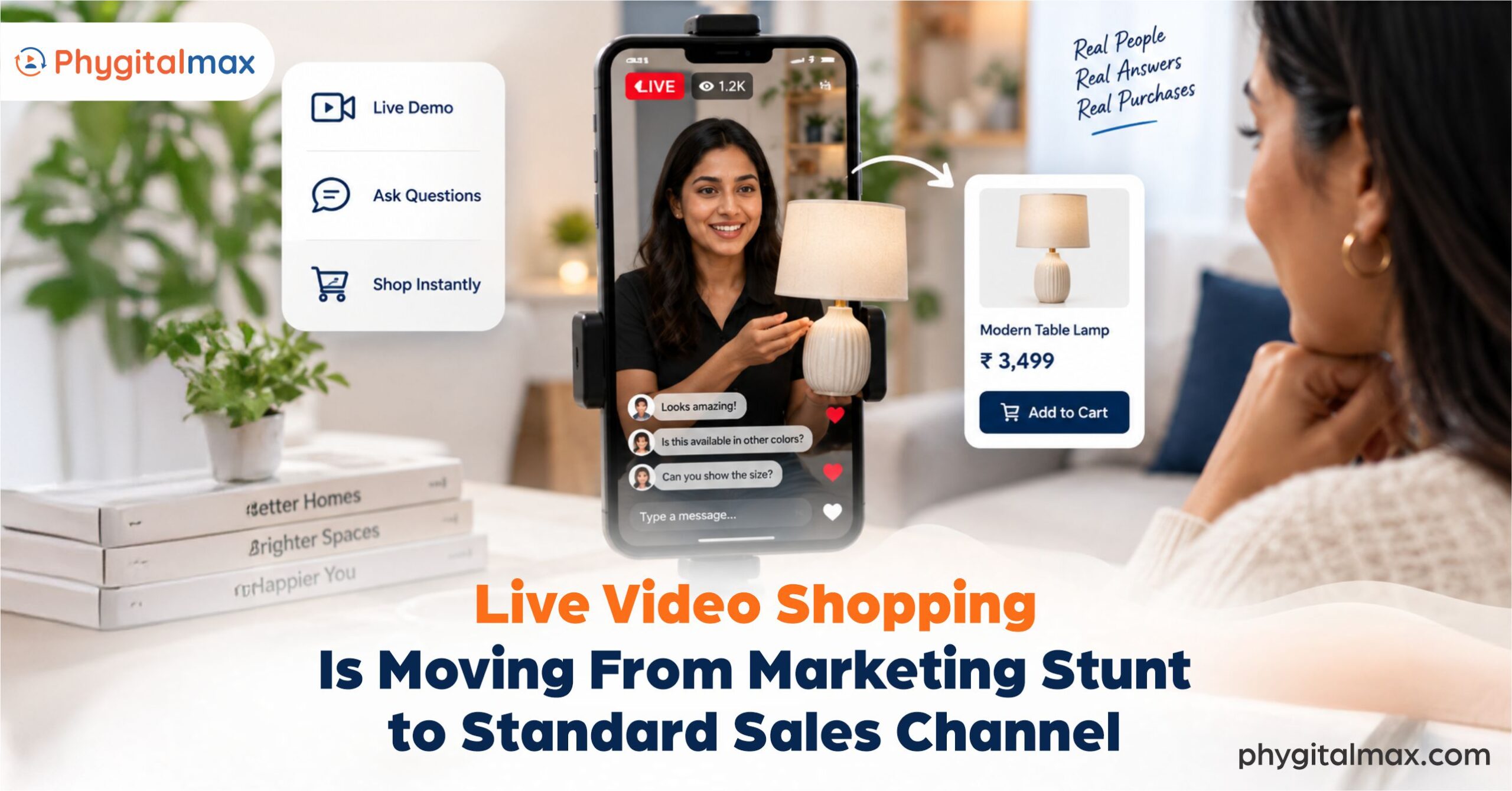
Why the brands still treating live shopping as a one-off campaign are already behind the ones who made it a permanent line item.
A year ago, live shopping was a calendar event. A brand would block out a launch week, book a host, run one livestream, screenshot the numbers for a slide, and move on until the next big drop. In 2026, that pattern is the exception, not the rule. The brands pulling ahead are running live video as a standing sales channel, always on, tied directly to the product page, not as a campaign that starts and ends.
That shift matters more than it sounds. A channel you switch on twice a year gets treated like marketing spend. A channel that runs every day gets treated like a sales channel, which means it gets a budget, a team, and a place in the revenue forecast rather than the events calendar.
Why Live Shopping Still Gets Treated Like a Stunt
Most teams that have tried live commerce have a version of the same story. Someone in marketing pitched a livestream around a launch. It got decent engagement, a spike in traffic, maybe a bump in same day conversion. Then the debrief happened, the host went back to their day job, and the report got filed under campaign results instead of channel results.
The problem is not that the format does not work. It is that a one-off event cannot prove out a channel. A single livestream tells you whether an audience will show up for an hour. It tells you nothing about whether live video converts browsers into buyers on a random Tuesday afternoon, three weeks after the last campaign ended, when there is no host, no script, and no hype cycle driving traffic.
Research from McKinsey has tracked this gap for several years now. Companies running live commerce report conversion rates approaching 30 percent, up to ten times higher than conventional ecommerce. McKinsey’s own analysis projects live commerce initiated sales could reach 10 to 20 percent of all ecommerce by 2026, this year. Those are not one-off campaign numbers. Those are the numbers of a channel that performs consistently enough to be measured like one.
Read more: Live Shopping vs Traditional Ecommerce: Which One Wins in 2026?
What Actually Separates a Stunt From a Channel
The difference is not production value. It is availability. A campaign-style livestream answers questions for the hour it is live. A channel answers questions for every customer who lands on the product page, on their own schedule, whether that is 11am or 11pm.
That means the infrastructure question is really an availability question. Can a shopper looking at a mattress, a ceiling fan, or a sofa get a real person on live video the moment they are deciding, not the moment a brand happens to be broadcasting. If the answer is only during scheduled events, the channel is still a stunt, just a well produced one.
The businesses making the jump from stunt to channel are the ones who stopped scheduling live video and started staffing it, the same way a store staffs a floor during business hours rather than only for a weekend sale.
Read more: Phygital Commerce Explained: How Brands Replicate In-Store Trust Through Live Video
The PhygitalMax Approach
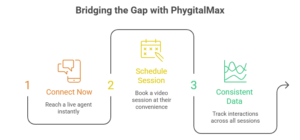
This is the exact gap PhygitalMax is built to close. Instead of a livestream that starts and ends, every product page carries a persistent Connect Now option, so a shopper can reach a live agent the moment they have a question, not only during a scheduled show.
If no agent is free that second, Schedule lets the shopper book a live video session at a time that works for them, so the brand never loses the shopper to a closed calendar or an empty stream. The result behaves less like a campaign tool and more like a staffed sales floor that happens to live inside the product page, available on the customer’s timeline instead of the brand’s broadcast schedule.
Because every session runs through the same connected layer, brands get comparable data across every interaction, not just the handful that happened to fall on a promoted stream date. That is what actually lets a business measure live video as a channel, consistent format, consistent handoff, consistent reporting, every single day it runs.
What This Means for the Business
- Live video stops competing with the marketing calendar, and becomes a permanent part of the sales stack, budgeted and measured like search or paid social, not queued behind the next campaign
- Conversion data becomes trustworthy, since numbers pulled from an always-on channel reflect real buyer behavior, not the artificial spike of a promoted one-off event
- Return on a fixed setup improves, because a studio or agent pool built for a single campaign sits idle between events, while the same setup running every business day earns back its cost far faster
- Customer support and sales stop being separate teams, since an agent answering a live video question about a product is one qualifying question away from closing a sale
- The brand builds a channel asset instead of a campaign archive, and a running channel with daily conversion data compounds in value the longer it operates
Frequently Asked Questions
Q: Is live shopping only useful for launch campaigns?
A: No. Launch campaigns are one use case, but the highest performing brands run live video as a standing option on every product page, available every day rather than only during a scheduled event.
Q: How is an always-on live video channel different from a livestream event?
A: A livestream event has a fixed start and end time and depends on an audience showing up while it is live. An always-on channel lets a shopper connect with an agent whenever they are actually deciding, which is usually not during a scheduled broadcast.
Q: Does this require a large production team?
A: No. A single trained agent working from a fixed setup can handle multiple products across a working day, which is a very different cost structure from booking a host and crew for a one-time event.
Q: What kind of products benefit most from live video as a sales channel?
A: Products where a buyer has real, specific questions before purchasing tend to see the largest lift, including furniture, mattresses, and home appliances, categories where photos and specs alone leave the shopper unsure.
Q: How does a brand measure whether live video is working as a channel rather than a campaign?
A: Track conversion rate, average handling time, and repeat engagement across a normal week with no promotion running. If the numbers hold up without a campaign pushing traffic, the channel is real.
Conclusion
The brands still asking whether they should run a livestream this quarter are asking the wrong question. The ones pulling ahead have already answered it by making live video a permanent fixture of the product page instead of a calendar event. The shift from stunt to channel is not about better production. It is about being available every single day a customer is deciding, not just the days a brand happens to be broadcasting.
Ready to turn live video into a standing sales channel? Book a live demo with PhygitalMax and see how it works.