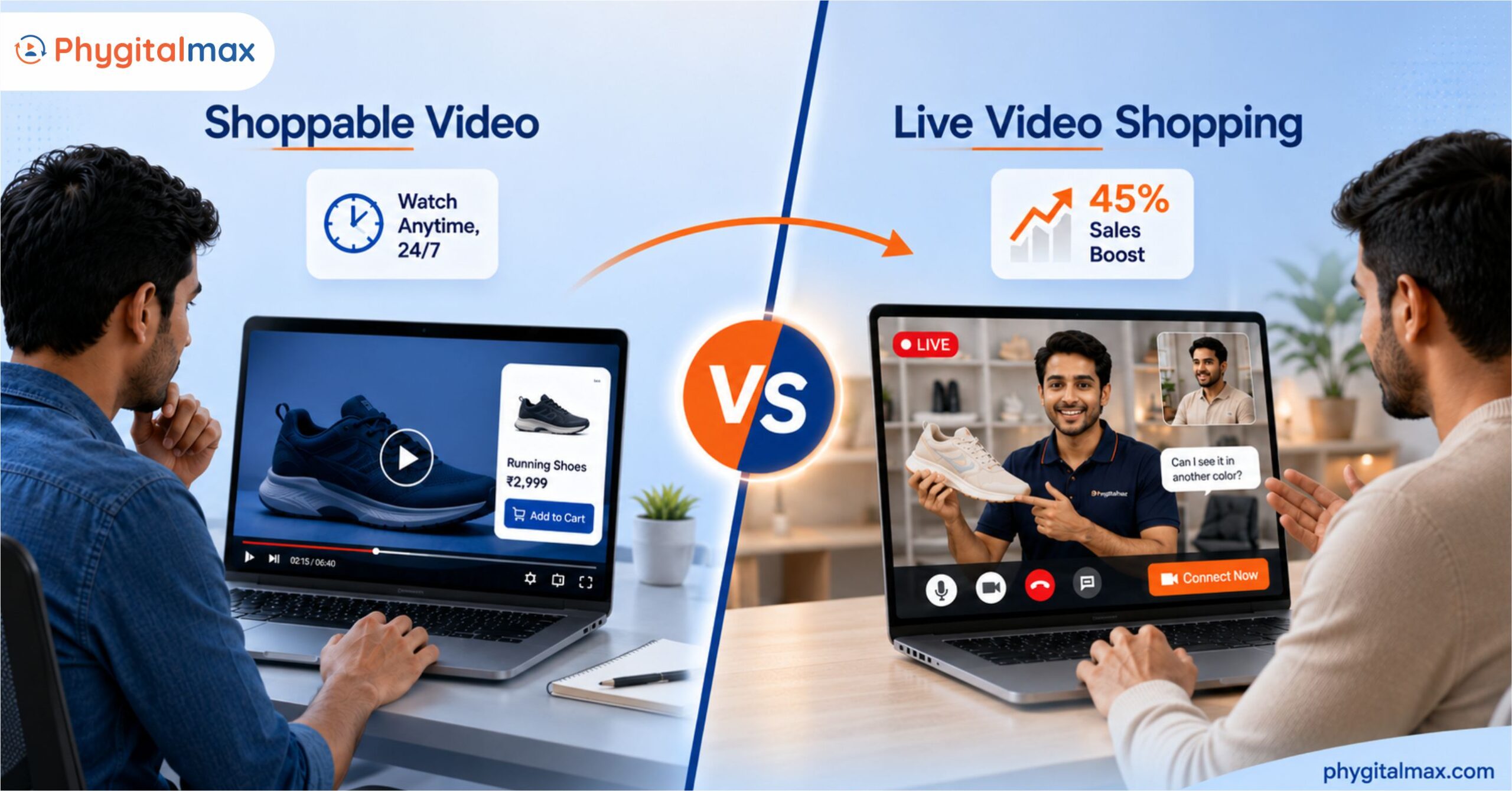
Two formats get lumped together constantly, and confusing them costs brands the exact moment that was supposed to convert. Here’s what actually separates a clickable product video from a live video shopping call, and which one (or both) your brand needs.
Quick answer: Shoppable video is a pre-recorded, on-demand video with clickable product overlays. The viewer buys at their own pace, without leaving the video. Live video shopping is a real-time video conversation, hosted by a person, where the viewer buys through a live interaction. One is a content format. The other is a live, human interaction.
What Is Shoppable Video? A Clear Definition
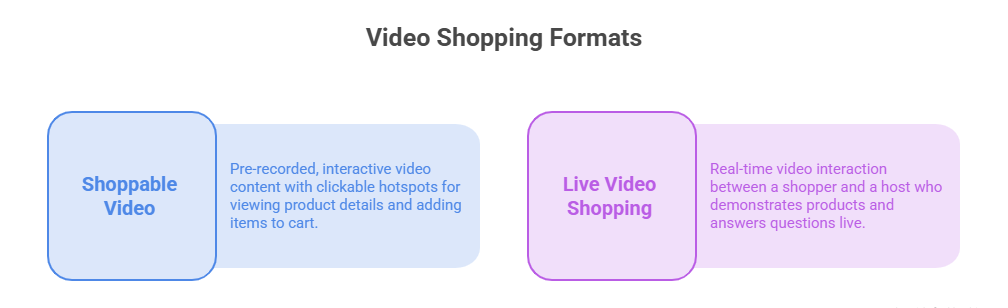
Shoppable video is pre-recorded, interactive video content with clickable “hotspots” placed on products as they appear on screen. A viewer watching a styling video or a product demo can tap the item they see, view price and variant details, and add it to cart, all without the video stopping or the page changing (Bambuser, 2026).
It is built to be always-on. The same video keeps working on a product page, category page, or homepage hero, months after it was recorded, identically for every visitor. Ted Baker used a pre-recorded, James Bond-style shoppable video for its “Mission Impeccable” campaign, letting viewers click on clothing worn by each character, driving a 30% lift in click-through rate (Firework, 2026).
What Is Live Video Shopping? A Clear Definition
Live video shopping is a real-time video interaction between a shopper and a person (a sales agent, product expert, or host) who demonstrates the product and answers questions on the spot, live, as they happen. This is the format behind Instagram Live Shopping, Amazon Live, and TikTok Live Shopping on the consumer side, and it’s also what enterprise platforms like Phygitalmax deliver directly on a brand’s own website: a live 1:1 video call with a product expert, no app download required.
Estee Lauder ran live shopping events on Facebook Live to launch products, with makeup artists answering viewer questions in real time, seeing a 400% increase in engagement during those sessions (Firework, 2026).
Which One Should Your Brand Use?
This isn’t a preference question. It comes down to three things you can check against your own catalog and funnel data right now.
How complex is the product, really?
A t-shirt, a phone case, a basic home good: shoppable video handles that fine. A washing machine, a piece of fine jewelry, a mattress, a piece of furniture: the questions get too specific and too varied for any script to anticipate in advance. This is exactly why FMCD and electronics brands see the sharpest gains from live video specifically. Phygitalmax’s own data shows live video demos cutting product returns by up to 40% in categories where a shopper’s uncertainty at checkout becomes a return three weeks later.
What does “no” actually sound like for your product?
If hesitation is generic (“I’m just browsing”), shoppable video’s convenience wins. If hesitation is specific (“will this fit my space,” “does this work with what I already have,” “what’s the warranty”), only a live human closes that gap. Look at the last 10 support tickets or abandoned-cart reasons your team logged. If most are answerable in one sentence by a person who’s looked at the product before, you already have your answer.
The quick litmus test:
- Choose shoppable video if: low-to-mid consideration, high SKU count, discovery-stage traffic, limited live-agent bandwidth.
- Choose live video shopping if: high consideration, high average order value, high return risk, or a checkout-stage hesitation you can name.
- Use both if: you’re a brand of any real size. Almost nobody should pick exactly one and stop.
Where Phygitalmax fits
If your answer keeps landing on “live,” that’s the entire reason Phygitalmax exists. It isn’t a shoppable-video add-on bolted onto a video player. It’s a live, human video layer built directly into the product page: a real product expert on a 1:1 or 1:many call, answering the exact question a hesitant shopper has, at the exact moment they’re deciding whether to buy. Enterprise deployments using it have reported a 70% increase in engagement, 30% lower cart abandonment, and a 45% boost in sales within a month, and the same live infrastructure extends past checkout into live video support for installation help and troubleshooting. For FMCD, electronics, and other high-consideration categories, that’s not a nice-to-have next to shoppable video. It’s the piece shoppable video was never built to solve.
See it on your own product pages, book a live demo.
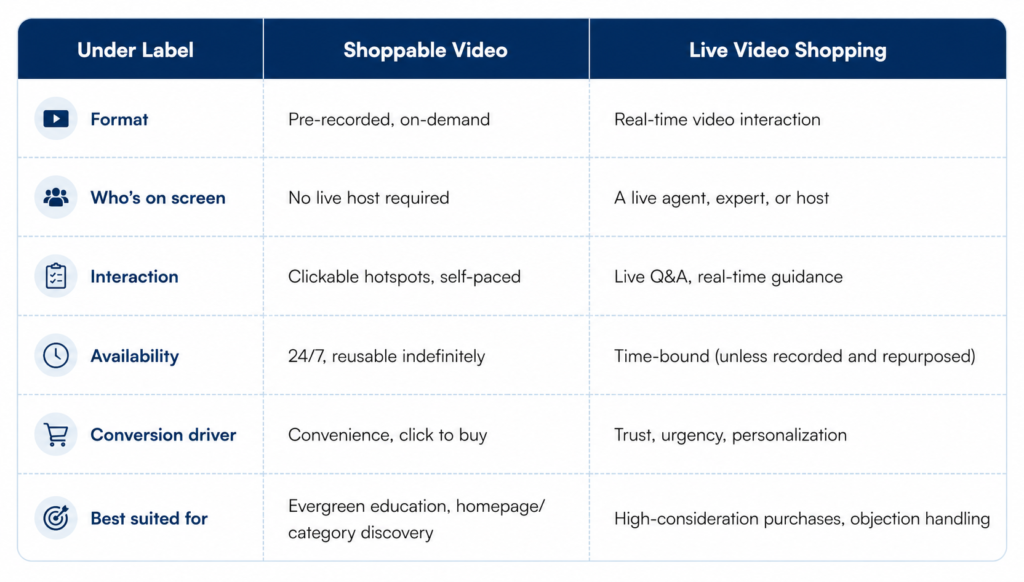
Shoppable Video vs. Live Video Shopping: Head-to-Head
The PhygitalMax Approach: Live Shopping and Live Support, Built Into the Product Page and Beyond
Phygitalmax is built for the live side of this comparison, not pre-recorded shoppable video:
- Live video shopping: a product expert on a live call with a shopper, on the product page, 1:1 or 1:many. Enterprise deployments have reported 70% higher engagement, 30% lower cart abandonment, and a 45% sales boost within a month.
- Live video support: the same real-time infrastructure past the sale, covering installation help, troubleshooting, and field service, with co-browsing and annotation built in.
Same underlying capability, two different moments: one converts a browser, the other turns a support ticket into a five-minute video call.
Shoppable Video and Live Shopping in India: What the Numbers Show
Coherent Market Insights sizes India’s live commerce market at roughly $4.5B in 2026, growing to $140.5B by 2033 (41% CAGR). IMARC Group models a 44.81% CAGR over a similar window. The exact number moves by methodology, but every major estimate agrees on the direction. Bain’s “How India Shops Online” points to Indian consumers favoring richer, assisted discovery over static listings, which is exactly where a live human on video, not a clickable pre-recorded clip, tends to close the doubt a script can’t, especially in high-return categories like FMCD and electronics.
Frequently Asked Questions
Q: What’s the main difference between shoppable video and live video shopping?
Shoppable video is pre-recorded and always-on; live video shopping is a real-time interaction with an actual person.
Q: Is shoppable video the same as a livestream?
No. A livestream is real-time by definition; shoppable video is the opposite, pre-recorded format.
Q: Which converts better, shoppable video or live video shopping?
Depends on product and moment: shoppable video lifts add-to-cart rates versus static pages, while live, human-hosted sessions tend to win on high-consideration purchases where a shopper’s specific doubt needs answering.
Q: Can a brand use both formats together?
Yes. Most mature strategies run live video for launches or high-consideration categories, then repurpose the recordings into shoppable, on-demand clips for ongoing use.
Q: Does Phygitalmax offer shoppable video, live video shopping, or both?
Phygitalmax is purpose-built for live video, real, two-way conversations with a product expert or support agent, across both the sales and support moments. It is not a pre-recorded shoppable video tool.
Conclusion
Shoppable video and live video shopping answer two different questions: “let a shopper explore at scale, forever” vs. “get this specific, hesitant shopper across the line right now.” Most brands need both eventually. Phygitalmax exists for the second one: live, human, video-first, and built into the product page itself.
See Phygitalmax’s live video shopping and support in action, book a live demo.